Compound interest is one of the most powerful concepts in personal finance, yet many beginners find it confusing at first glance. Simply put, compound interest is the interest you earn on both your original money and the interest that has already been added to it. Over time, this snowball effect can turn modest, regular savings into a surprisingly large sum. Understanding how it works is the first step toward making your money grow while you sleep.
What Is Compound Interest?
When you put money into a savings account, a certificate of deposit, or an investment, you earn a return on it. With simple interest, you only earn interest on the original amount you deposited, known as the principal. With compound interest, however, each new round of interest is calculated on the growing balance, which includes all the interest earned so far. That means your money starts earning returns on its own returns, and the growth accelerates over time.

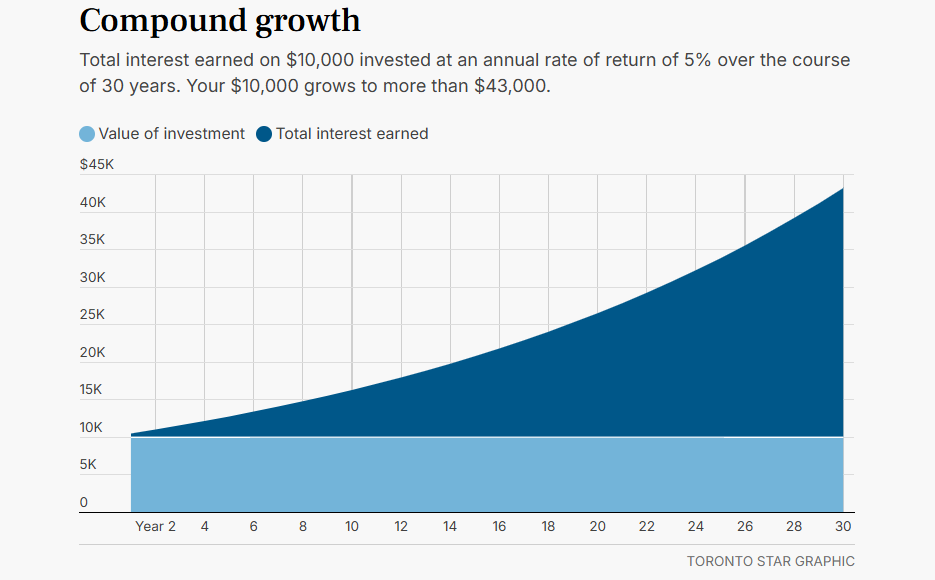
Think of it like a snowball rolling downhill. At first it is small and gathers snow slowly, but as it gets bigger it picks up more snow with every roll. Compound interest behaves the same way: early growth looks slow, but the longer it runs, the faster your balance climbs.
How Compounding Actually Works
The mechanics of compounding are simpler than they sound. Each compounding period, your balance is multiplied by the interest rate for that period. Many experts suggest paying attention to four factors that determine how fast your money grows:
- Principal: The amount of money you start with or add along the way. Larger contributions give compounding more to work with.
- Interest rate: The percentage return earned per period. Even a small difference in the rate can lead to a large gap in results over many years.
- Compounding frequency: How often interest is calculated and added, such as annually, quarterly, monthly, or daily. More frequent compounding generally produces slightly higher growth.
- Time: The number of years your money stays invested. Time is the most powerful factor of all, as you will see below.
A Simple Year-by-Year Example
Imagine you deposit $1,000 into an account that earns 5 percent interest compounded once per year. After year one, you earn $50, bringing your balance to $1,050. In year two, the 5 percent is calculated on $1,050, not $1,000, so you earn $52.50. By year three, your balance is $1,102.50 and you earn $55.13. The extra dollars look tiny at first, but they keep increasing because each year’s interest builds on the last. Over decades, those increments add up dramatically.
Simple Interest vs. Compound Interest
To see the difference clearly, compare the two methods on a $10,000 deposit earning 5 percent annually over 20 years. With simple interest, you would earn $500 every year for a total of $10,000 in interest, leaving you with $20,000. With annual compounding, the same deposit would grow to roughly $26,533, because each year’s interest joins the principal and earns interest of its own. That gap of more than $6,500 comes entirely from compounding.
Most savings accounts, investment funds, and reinvested dividends use compounding, which is why comparing financial products on their annual percentage yield, which reflects compounding, gives a fairer picture than looking at the basic rate alone.
The Power of Time: Why Starting Early Matters
Time is the fuel that makes compounding so remarkable. The earlier you start, the more compounding cycles your money goes through, and the difference can be staggering. Consider two savers who both invest $200 a month earning an average 7 percent annual return compounded monthly:
- Early starter: Begins at age 25 and invests for 40 years, contributing $96,000 in total. The balance could grow to roughly $525,000.
- Late starter: Begins at age 35 and invests for 30 years, contributing $72,000 in total. The balance could grow to roughly $245,000.
The late starter saves for only ten fewer years and contributes $24,000 less, yet ends up with less than half the final amount. Those extra ten years of compounding did most of the heavy lifting. Many experts suggest that for beginners, starting small but starting early beats waiting until you can invest large amounts.
How Small Contributions Add Up
You do not need a fortune to benefit. Regular contributions combined with compounding can outperform larger one-time deposits made later. The habit of investing consistently matters more than the size of any single deposit, because each contribution gets its own chance to compound for years.
How to Make Compound Interest Work for You
You can put compounding to work in several practical ways. Here are the steps many beginners follow:
- Open a high-yield savings account or retirement account and start contributing, even with a small amount.
- Choose investments or accounts where earnings are reinvested automatically, so returns keep compounding.
- Set up automatic monthly contributions to keep growing your principal without relying on willpower.
- Leave your money untouched for the long term, since withdrawals interrupt the compounding cycle.
- Compare accounts by their annual percentage yield to find options where compounding works hardest.
It also helps to watch out for the flip side: compound interest works against you with debt. Credit card balances compound in the same way, which is why high-interest debt can grow so quickly. Paying it down frees your money to compound in your favor instead.
Conclusion
Compound interest rewards patience more than anything else. By earning returns on your returns, it turns time into your greatest financial ally. You do not need expert knowledge or a large starting sum, just a basic understanding of how compounding works and the discipline to start early and stay consistent. The sooner you begin, the more of that snowball effect you will enjoy. Your future self will thank you for the growth you started today.